Wednesday, November 16, 2011

Forensic Science Project Part II : Hair/Fiber Analysis


.


Reliability of hair/fiber crime scene data

Forensic scientist students need to learn about how important the reliability of hair is in crime scene and how hair and fibers are used.

Hair and fiber evidence is critical to crime scene investigators because they can know who is guilty for a crime.  During the performing of everyday activities, humans shed hair and fiber evidence from their bodies, clothes and other objects or materials of which they make contact with. Forensic analysis may be used to examine such trace evidence to summarize about the activities of persons unable or willing to explain their purpose at the crime scene. For instance if crime scene investigators wanted to reconstruct the events experienced during the crime, they can use carpet fiber form a car of a serial killer to draw connections between the serial killer and his victims, who contained the fibers on their corposes. There were two men named John Glaister and John Hicks confirmed about the accuracy that hair science was true. Many people relied on DNA testing of hairs and fibers to release them from prison. A man named James Driskell was in prison for 12 years until DNA testing of hair analysis proved him innocent for the doing a particular crime. This case shows that hair and fibers are reliable to show the innocence of a person in a court trial. Even though sometimes hair can be a great evidence for the court room, hair analysis may not tell the person’s individual identity. The federal bureau of Investigations says hair is 100%  accurate for evidence in court.

In my personal opinion I believe that the reliability of hair and fibers are important because they are the main source of getting someone out of trouble. Like for instance someone is in jail for a murder crime they know they did not commit and they have no proof that they were not at the crime scene. Your whole life depends on the hair or particular fiber that the forensic scientist collect. If the DNA does not match to that particular someone then they are free. Now if the hair or particular does link up to that person they are in some deep stuff. So I feel the reliability of hair and fibers are so important in life.

Citations

Diamond, Giselle. "Forensic Science: Hair Fiber Analysis | EHow.com." EHow | How to Videos, Articles & More - Discover the Expert in You. | EHow.com. Web. 04 Dec. 2011. http://www.ehow.com/about_6102496_forensic-science_-hair-fiber-analysis.html.
This website gets the credibility for all the research in my blog posting for the relability of hair and fibers.


Links


http://www.ehow.co.uk/about_5640929_forensic-science-hair-fiber-identification.html

Tuesday, November 15, 2011

Forensic Science Part II: Hair/ Fiber Analysis

Hair/Fiber Collection Techniques


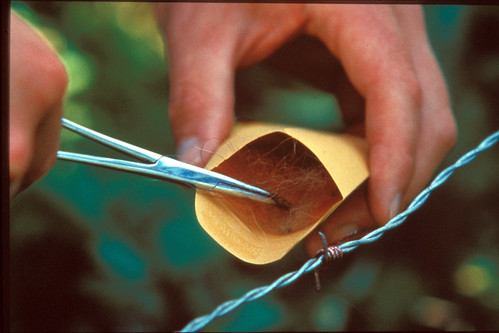
Hair and fibers are important to be collected at a crime because they can tell who is responsible for the crime. However, there particular techniques to collect hairs and fibers they do not  need to be taken lightly. The human hair can define that particular person it belongs to. The examination of hair can tell what gender, race, age that person who left the human hair at the crime scene. To collect a hair sample at crime scene investigation forensic scientist students need to first have a tweezers present and pick up the hair sample. Next, take a envelope and insert the hair sample into the envelope. For the third step forensic scientist students need to label envelope of the specific name of where the hair sample comes from. Now on some occasions hair will be attached different things including blood, or caught in a crack of a glass. If this event happens you are not suppose to remove that hair sample from the object. The first step in order to collect that particular small hair is mark where hair is, then wraps the hair sample and put in an envelope. Do not forget to label the envelope of where the hair is located .


Fiber Collection Techniques

Tapelifting
Vacuuming
Fibers of hairs can be found in different objects such as screens, broken glasses, cars, houses, and even on animals if during the a crime scene. The fibers that are collected from a car can be sent to forensic scientist laboratory to see if they match to some victims of a crime. When examinations occur, it can reveal the different colors of the fiber and type of fiber it is such as wool, cotton, Polyester or etc. Now these are the steps to collect large fibers from crime scene first forensic scientist students need to pick up the fiber with your fingers and place it in a envelope. Next step label the envelope of the type of fiber that is in the envelope. Remember an important note that forensic scientist students should never put the fibers directly in the envelope you might lose the fiber. Now if the fibers small the first step is to wrap the whole area that contains the fiber and send the fiber to nearby forensic scientist laboratory. For collecting hair and fibers combined forensic scientist students can use these techniques such as tape lifting. First, the trace tape is applied to the location of the hair and fiber. Second take the sample and insert it into envelope.  An alternative technique for collecting hairs and fibers combined is vacuuming. This means when hair and fiber sample is discovered it is vacuumed into a filter trap. Only if have laboratory sends a notice forensic scientist students can collect fibers by placing tape on them.

I think personally while collecting hairs and fibers should be handled delicately because a lot of those hairs and fibers can trace a suspect back to the actually crime scene. Hairs and fibers are two of the most important things to be collected at a crime scene. As I am imagining fibers would probably be hard to collect because they are so little. Forensic scientist could easily drop them and probably could not be found. To collect those hairs and fibers you have to handle them with care and be patient and gentle with them. I on the other hand is I am not very gentle and patience. So I being a forensic scientist is probably out of the question.


Citations for pictures

"Glassine Envelopes Manufacturer & Wholesale Supplier From Usa." Small Business Manufacturer, Wholesale Supplier, Buyers & Free Tender Information. Web. 29 Nov. 2011. <http://www.hellotrade.com/spexforensics/glassine-envelopes.html>.

This website gets credibility for the visual image of the plastic baggy of collected hairs and fibers.

Citations for research

"Evidence Collection Guidelines." Crime Scene Investigator Network. Web. 29 Nov. 2011. <http://www.crime-scene-investigator.net/collect.html>.

This website gets the credibility of the details of showing how to collect fibers and hairs form a crime scene.

Links


Monday, November 14, 2011

Forensic Sceience Project Part I: Fingerprinting

        
The History of Fingerprinting

                                                        There have an abundant of people who contributed the study of fingerprinting and thanks to them today we have a better way of identifying people.
Alphonse Bertillion
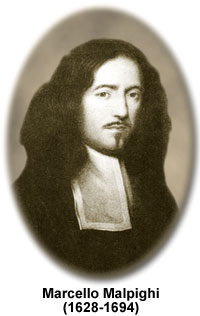
The forensic science of fingerprinting identitfication has served an abundant of governments worldwide for 100 yrs to provide accurate identification of who the culprit is. Fingerprinting is the most commonly used forensic science in the world.There are many records of fingerprinting from centuries ago. Babylons however  pressed there fingerprints in clay to record business transactions. The Chinese used fingerprint ink impressions on paper to identify their children and business transactions.  They are significantly important founders who has started the history of fingerprinting such as Alphonse bertillion. Alphonse Bertillion was a french police officier who created a system to measure and record certain body parts such as head length, foot length, arm length and finger length. The measurements he received were reduced to a formula, that would applied to one human being in their adult life. Anthrometry was the first scientific system used by an pollice officier to identify criminals.The system was called the Bertilllion System that lasted 30 yrs. Another founder by the name of Marcello Malpighi in 1686 ,as a professor of anatomy, he  discovered particular ridges, spirals, and loops in the fingertip. These founders identify fingerprints by hand so today we could have knowledge of personal identification of a fingertip. Today we use fingerprint scanners and other uses of technology to identify and match different fingerprints.Sir Edward Henry, commissioner of the Metropolitan Police of London, soon became interested in using fingerprints to nab criminals. In 1896, he added to Galton's technique, creating his own classification system based on the direction, flow, pattern and other characteristics of the friction ridges in fingerprints. Examiners would turn these characteristics into equations and classifications that could distinguish one person's print from another's. The Henry Classification System replaced the Bertillonage system as the primary method of fingerprint classification throughout most of the world.


Lastly there was one case in particular that helped fingerprint identification. Juan Vucetich made the first criminal fingerprint identification. Juan Vucetich observed the print of a woman who murderd her two sons and then cut her  own throat to blame another person for doing the crime. A bloody print was left on the door post, and Juan Vucetich was able to identify that the woman was the murderer.


Opinion

The history of fingerprinting is amazing to see. To think all these people contributed to the discovery of a fingerprint that is amazing. Today without those people we would not catch criminals. then criminals can act in anyway and constantly kill people without being caught. So i appreciate them for there discovery of fingerprinting.i had  not idea fingerprinting had a history. I though someone just found that you could make fingerprints on the door or something.i have learned alot about this research on the  history of fingerprinting such as the people whoc contributes and how they used them to solve a crime scene.

Citations

 "The History of Fingerprints." Come Onin to Read about Fingerprints and HHH... Web. 04 Dec. 2011. <http://onin.com/fp/fphistory.html>.
This website gets the credibility for research of the history of fingerprinting except the fingerprinting case.


Links

http://www.fingerprinting.com/history-of-fingerprinting.php

http://www.essortment.com/history-fingerprints-21335.html
"History of Fingerprints." Crime Scene Forensics, LLC. Web. 21 Nov. 2011. <http://www.crimescene-forensics.com/History of fingerprints.html>.
This website gets the credibility for the case about criminial identification of fingerprints.

Sunday, November 13, 2011

Forensic Science Part I: Fingerprints


Procedure for collecting/lifting prints
These procedures can help forensic scientist know about the different methods of collecting fingerprints.                                                       
                                                                              This image below is about dusting for fingerprints.
  • In a Crime scene forensic scientist use specific methods such as dusting, the electric pen, and chemical bonding agents to collect fingerprints at a crime. At a crime scene it is very important that forensic scientist do not mess up on collecting fingerprints because the fingerprints can reveal who was there during the crime.The first method to collect fingerprints at a crime scene is dusting. Dusting is very common technique in collecting fingerprints. There are specific steps in dusting in order to collect the fingerprints. The first step is when forensic scientist hunt for fingerprints and in order to collect those fingerprints they hunted for they use black ,magnetic, and silver powders. These powders are used to collect fingerprints off wood, ziplock bags,metal and glass. This particular method  of collecting fingerprints works because it can stick to the oil in the fingerprint.Step two in the method of dusting is picking up a piece of tape to lift the print off the surface. The sticky tape collects the oil and dust within the impression. The last step is putting the fingerprint evidence card that was collected in a envelope.Forensic scientist students need to know that dusting for fingerprints can be important in identifying who the suspect of a crime is.


  • The second method of collecting fingerprints is the use of the electric pen with a metallic filing brush. This sounds very weird but is quite relevant to collecting fingerprints.There are not that many steps in using the electric pen. The metal filing brush that is used to collect fingerprints does not affect the print in any way. This is a electromagnet that gets iron filings that make the brush. The brush in the electric pen breaks off and the filings adhere to the oils.Then the fingerprint is lifted with an adhesive.


  • The third method for collecting fingerprints are using chemical bonding agents. However there are specific procedures to collecting fingerprints in this method.The first step is to place the object that contains the fingerprints in a heated area.Then the chemical bonding agent superglue fumes is used to warm the surroundings. The result is a white substance that is formed from the print and then it is taken for comparison.                                                                                                                                                                                                                                                                          This image below is a livescan.
  • The fourth method for collecting fingerprints is using the  livescan and biometric gadgets .The livescan is part of laser technology that is used to collect fingerprints. The are three specific steps to collect fingerprint using  livescan. The first step is using a glass pad to clear prints. The second step is sending the results of the collected fingerprints to a databse to find a match to someone. The biometric gadget takes fingerprints automatically and match them to a database system. This method is much quicker because it does not take that the much time to see if the fingerprints match to anyone.
These collection methods of fingerprinting has taught me abundant of things.First of all I thought there was only one method for collecting prints including dusting. These gadgets that have been created helps the world in a lot of ways. The only gadget that interest me is the biometric gadget. The biometric gadget is so quick and fast that there is no reason to commit a crime. After all once they swipe the gadget over the fingerpriints they are going to take you probably immediately to prison not jail.The biometric gadget looks very cool to use. This method also makes it harder for criminals to get away.
Citations

"Popular Methods of Collecting Fingerprints." Look For Articles - Articles Directory Submission Service Since 2005. Web. 03 Dec. 2011. http://www.look4articles.com/Art/209347/39/Popular-Methods-of-Collecting-Fingerprints.html.

This website above gets the credibility forall the research and details about each common method of collecting fingerprints.

Citations for pictures

"Livescan Fingerprinting." Guard Card - California Guard Card Training. Web. 03 Dec. 2011. http://www.firearms-training.info/livescanfingerprinting.html.

This website above gets the credibility for the visual image of the livescan.

"Stock Photo: Dusting for Fingerprints." Stock Photography: Download Free Stock Photos & Royalty Free Images. Web. 03 Dec. 2011. http://www.dreamstime.com/stock-photo-dusting-for-fingerprints-image4586740.
This website above gets the credbility of the visual image of dusting for fingerprints.

Forensic Science Project Part I: Fingerprints

Basic shapes and patterns of fingerprints
 Basic Shapes and Patterns of Fingerprints
                                                                                          This is a image of my own fingerprints.


Fingerprints in my opinion are the main way of identifying a person and fingerprints have different shaped ridges. Fingerprints are unique that there is only a 64 billion chance that anyone’s fingerprint will match up to another fingerprint. Fingerprints are made of whorls, ridges, loops, arches, tented arches and central pocket loops. It is important that forensic scientist students know the difference between multiple of fingerprints.

A plain arch is a fingerprint that has ridges flowing from one side of the impression of the fingerprint and flows out the other end of the fingerprint impression. There is a 5% chance of plain arches collected at any crime scene. I think plain arches does not have a creative design it  is so plain. I guess it defines the plain part of plain arches. The fingerprint almost looks like a plain line except for the urge of an arch on the top of the fingertip. Tented arches have an angle or up thrust, that has a shape of a tent in the middle of the fingerprint. Tented arches also have a 5% chance of being collected at a crime scene. A tented arch has many of biblical stories that go with the tented arch and has greater meaning. This fingerprint has a little more creation in the fingerprint it is shaped kind as if a tent as ridges go upward.

Forensic scientist students need to know loops are 60-70 % of fingerprints that are collected at a crime scene. The Ulnar loop has a side loop with the shape of a ulna bone. My personal opinion is the Ulnar loop fingerprint has a creative design to it. The design looks like it has loop door that you can go to another world in. The Radial loop to me looks like a flat rainbow that has no color to it. The Radial loop is 60 to 70% more likely to be collected at a crime scene. The Radial Loops are named after the radius bone in our body. A radius bone is in the forearm, which connects the hand on the same side as the thumb.


There are three types of whorls in fingerprint patterns. A Plain Whorl has a unique design like the hypnotizing circle that goes continuously around in circles. Whorls are 25-35% more likely to be collected at a crime scene. The plain whorl has two deltas and one of the ridges in the fingerprint makes a complete circuit in the fingerprint. There is an imaginary line in the fingerprint is drawn between the two deltas that cross one of the re-curving ridges in the inner pattern of the circle. Next, the central pocket loop has two deltas with one core and lacks symmetry. The creative design of the fingerprint shape looks like a finger that has bleeding occurring in the center of it. Some ridges in the fingerprint look curved. A Double Loop fingerprint consists of two deltas, which are both distinct and have distinct shoulders. The double loop fingerprint has a formation. A  Accidental Whorl   consists of two different types of patterns and with two or more deltas. The Accidental Whorl is on the right side and has a circle formation in my own eyes.

Fingerprints are so unique they have so many amazing details. The fingerprints have specific curves and ridges and they have biblical stories to give details about each fingerprint too. I did not even know that fingerprints are named specifically they just looked like regular fingerprints. I have noticed before I did the research that there were shapes or lines going through the fingertips. I have learned a lot about identification of each fingerprint.


Citations

Watson, Stephanie. "HowStuffWorks "What Are Fingerprints?"" HowStuffWorks "Science" Web. 29 Nov. 2011. <http://science.howstuffworks.com/fingerprinting1.htm>.

This website gets the credibility of the idea about there's a one in 64 billion chance that your fingerprint will match up exactly with someone else's.

"Fingerprint Patterns." Fingerprinting. Web. 29 Nov. 2011. <http://www.fingerprinting.com/fingerprint-patterns.php>.

This website gets the credibility of the details definitions about arches, whorls, and loops in my background information.

There Are Three Basic Types of Fingerprints." Dactyloscopy. Web. 29 Nov. 2011. <http://members.fortunecity.com/julzjerg/finger.htm>.

This website gets the credibility of revealing the detailed research definitions about double loop plain whorl, and central pocket loops.


"Fingerprint Patterns." Odec - Online Digital Education Connection. Web. 29 Nov. 2011. <http://www.odec.ca/projects/2004/fren4j0/public_html/fingerprint_patterns.htm>.

This website gets the credibility of giving the percentages of each fingerprint pattern shapes being collected at a crime scene. This website also gives the detailed definition about plain arches , ulnar loop and radial loop.


Citations for pictures

"Understanding Fingerprints and CSI Crime Detection." Viewzone Magazine: A Look at Life and Human Culture from Different Angles. Web. 29 Nov. 2011. <http://viewzone2.com/fingerprint.html>.

This website above gets credibility of visual picture of basic shapes of fingerprints.


Links:
http://www.senseme.com/scripts/biometrics/fingerprints.htm


http://docs.google.com/viewer?a=v&q=cache:ty6D4wdXHeQJ:podcasts.shelbyed.k12.al.us/adishman/files/2011/09/Fingerprints-Final.ppt+www.podcasts.shelbyed.k12.al.us+adishman+files+...+Fingerprints+Final.ppt&hl=en&gl=us&pid=bl&srcid=ADGEESjuldjDg5rkXud2mUMjTRLrf0CSG4b8A0b8JDsSzi7Ydyf90lObyQwBgGHFrqMRqQnSJ3sSd5NPV5QOSBoRy9pJJaMRpVa5PM_lBekfG3kIcYsmevWs_ZtM-fuQ7P7x1Fym_Toq&sig=AHIEtbQa1eBa6TN9vH4X3Yy9IJ6gq7G09g


Saturday, November 12, 2011

Forensic Science Project Part I: Fingerprints

fingerprint on hard surface

    Techniques and Chemicals used to develop prints on nonabsorbent, porous, hard, and smooth surfaces
    Dusting for fingerprints can reveal the hidden information about the identity of a suspect ,victim , and witness. In addition, dusting for fingerprints on nonabsorbent, porous, hard, and smooth surfaces can be used to verify records and create a link between the suspect and the victim of a crime. There is a specific procedure of how to collect prints off nonabsorbent, porous, hard, and smooth surfaces. The first step is examining where you want your fingerprint to be on the surface area. The second step is creating a fingerprint impression on the surface by taking oil from your nose and inserting it on the surface. When the fingerprint touches a smooth surface, it creates friction as it releases the oil between the ridges and the print that is on the on the surface. The third step is taking a small amount of powder and pour it on a piece of paper. Remember forensic scientist students that you need to take a powder that does not have the same color has the surface to dust your fingerprints. The fourth step is to shake the brush and dip it into the particular powder but tap the brush gently so there will not be a lot of excess powder. The fifth step is brushing the powdered surface of the fingerprint impression in slow strokes. The sixth step is taking cellophane tape and placing on the sample of the fingerprint. This is excellent procedure to go by as forensic scientist students when dusting fingerprints on nonabsorbent, porous, hard, and smooth surfaces.
     
    In latent print processing, certain powders are used on are used such as black powders, silver powders, and magnetic powders. Black powders are used  on light colored surfaces in order to see where to collect the fingerprint. Silver powders are used on metal surfaces, dark surfaces, and glass objects to dust. The magnetic powder is used for dusting fingerprints on wood, zip lock bags, aluminum, and metal cans. Now on soft and porous surfaces there chemical that is used called Iodine fuming. Iodine Fuming is iodine crystals are placed in a cabinet then is heated and iodine vapors are released. The iodine vapors combine with oil prints the print starts to become visible. On soft and porous surfaces such as cloth and paper are visible to the naked eye by using chemicals. The chemicals such as Ninhydrin . Ninhydrin reacts with amino acids to reveal a color of purple or pink. I love those colors. Another example of a chemical that can be used is Silver nitrate. Silver nitrate is a least toxic way of developing prints. Then the silver nitrate is mixed with distilled water and applied to paper. The paper is exposed to light. Then the prints will start to turn black.
    In my personal opinion, I did not know there were so many specific powders used on specific surfaces. I thought you would just lay a print down and brush with some white powder. Now I realize that u have to be very specific in dusting for fingerprints. The powders consist of magnetic, silver, and black. I think dusting for fingerprints are to hard do because of trying to dust the print off the surface. It is unique how they have specific steps in order to collect the fingerprints off the surface. I think learning about the different powders in procedures used in dusting will help me dust fingerprints off anything in the future in case like if my little sister stole something from me.
    Citations
    Contributor, An EHow. "How to Dust for Fingerprints | EHow.com." EHow | How to Videos, Articles & More - Discover the Expert in You. | EHow.com. Web. 04 Dec. 2011. <http://www.ehow.com/how_2074683_dust-fingerprints.html>.
    This website above gets the credibility of the idea about the procedures of dusting prints on particular surfaces.
    "Types of Fingerprinting." Fingerprinting. Web. 2 Dec. 2011. <http://www.fingerprinting.com/types-of-fingerprints.php>.
    This website above gets the credibility of the idea about the different powders that are used on various surfaces.
    Citations for pictures     "Photo: Dusting for Fingerprints © Scol22 #13797998." Royalty Free Stock Photos at Fotolia.com. Web. 04 Dec. 2011. <http://us.fotolia.com/id/13797998>.
    This picture gets the credibility of the visual image of dusting fingerprints.


      Links

               http://www.chymist.com/FINGERPRINTING.pdf

    Friday, November 11, 2011

    Forensic Science Project Part I: Fingerprinting

      Fingerprint types
      Types of Fingerprinting
      Fingerprints do not just have basic shapes and patterns but they also have specific types that can be seen or can not be seen. Direct fingerprints are literally collected from a suspect at a crime scene.Direct prints also known as visible prints they occur when a specific substance such as blood, dirt or oil on the finger comes in contact with a smooth surface. This leaves a ridge impression that is seen by the naked eye clearly. This print probably is just take at a enrolment of a person going to jail. An alternative type of fingerprint is latent prints. This particular type of fingerprint is formed from sweat found in the ridges of the finger. When a finger touches any body parts, moisture sticks to the ridges of the finger . So when fingers touch an object like a green lamp a transparent material is transferred onto that object. The impression that is left on the lamp reveals the ridges in the fingerprint. Plastic prints are visible to the naked eye. Plastic prints occur when a finger touches soft surfaces such as clay, wax, or paint. These surfaces of clay, wax, or paint retain the finger print impression.
      Citations
      "Types of Fingerprints." Fingerprinting. Web. 04 Dec. 2011. <http://www.fingerprinting.com/types-of-fingerprints.php>.
      This website  above gets the credibility for the research for all types of fingerprints.
      Links