Friday, November 25, 2011

Forensics Science Project Part III: Handwriting Analysis

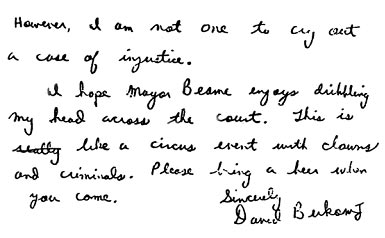
Pictures and Analysis of Handwriting Analysis Template.  State how the free handing forgery and tracing forgery differ using the 12 Handwriting Characteristics.  In other words, how would you tell that they are forgeries? 

In the Handwriting template activity we learned how to do free hand forgery and trace hand forgery by copying someone else handwriting characteristics. The first step was free hand forgery. I copied my own handwriting on the original sample of the handwriting template. I copied my handwriting in cursive and print. I wrote a sentence that said the quick brown fox jumped over the lazy dog. After I copied my handwriting, I gave my handwriting template to another classmate. She analyzed my handwriting. My analysis section of my original sample said that there was pen lifting occurring and there were different ratios of height, width and size of letters. I usually start of doing cursive letters then I end with print letters. It is a weird way of writing but I will change my habit. Next, my classmates’ free hand forged my handwriting in the other part of the handwriting template. When the classmate was done, their handwriting did not match my handwriting whatsoever. Actually, the person who was trying to forge my handwriting said it was too hard to copy and almost gave up. Then we used trace hand forgery. The trace hand forgery was easy because all you had to do was trace their handwriting. The handwriting that my classmate’s did was very similar to mine because she used traced hand forgery handwriting. Her handwriting had the similar downward stokes and huge letters in it like I did.
I think free hand forgery is harder than trace hand forgery because you would have to try glancing at the handwriting and then try to copy my difficult handwriting characteristics. I even had a hard time free hand forgery because you’re trying to make it perfect like their handwriting. Trace hand forgery is easier than try to free hand forging someone else’s handwriting. So how hard could that be? There can be signs of forgery by using of pen pressure. That is the number one sign of doing forgery. So that is what I think of trace hand forgery and free hand forgery.


Thursday, November 24, 2011

Forensics Science Project III: Handwriting Analysis

List of 12 Handwriting Characteristics


Handwriting Analysis characteristics

The 12 Handwriting characteristics is very important to forensic scientist students because it helps to examine forgery in checks and other forgery of notes in a crime. Everybody has a unique personality in their handwriting because of spontaneous interactions between someone’s brain, eyes and hands. Handwriting can change by that physical or emotion state that person might be going through. As a person gets older, their handwriting gets distinctions. These  are the 12 different handwriting analysis characteristics. The first handwriting characteristic is line quality, which means that the handwriting could have been shaky or might have free smooth flow of words. The second handwriting characteristic is called the spacing of words and letters. This handwriting characteristic means that letters in the handwriting might have consistent spaces or no spaces between the letters of the words. The third handwriting characteristic is called the examination of ratio of height, width, and size of letters.


    This handwriting characteristic means that the letters in a word could start with tall large letters then end with short thick letters. It matters how the letter of the words balance out. The fourth examination technique is pen lifting which means the writer may start writing a word from a note then stop in the middle of the word and then start all over again. The pen lifting technique is very important to examine because it can usually mean forgery is taking place. The fifth examination is the connecting strokes this means that the capital letters may be connected to the lower case letters. The sixth examination is called the beginning and ending strokes, which means the letters may have curls, loops and may have a upward or downward stroke. The seventh examination is called Unusual letter formation this means letters could form letters with backward letters and unusual attributes on letters of words. I often myself do that in a lot of my handwritten notes. I have tried to stop that particular technique but it always tends become a habit after while. I guess my mind starts always cursive letters and then starts with normal print handwriting. I guess in my fifth and sixth grade year my mind gets mixed up on cursive lettering and that is why I have weird letter formations. The eighth examination is called pen pressure means that if the note might have upward and downward strokes all through the words. When tracing is taking place in a forgery of a note or check pen pressure is sometimes applied during tracing. The ninth handwriting characteristic is slant letters which means there could be letters that are slant from the right or the left side. The tenth handwriting characteristic is baseline habits. This means that letters in the word could be below the particular imaginary line or all on the same line. The eleventh handwriting characteristic is fancy writing habits. This handwriting characteristic means that the letters in the word could have extra trimmings or frills. The last handwriting analysis characteristic is diacritics. Diacritic means that writing is examined how the t’s are crossed and how the I’s are dotted. They could be to the left or the right of the letter. They also could have not crossed the t's and dotted the I’s.


"Handwriting Analysis Teacher Background Information." Forensic Investigations. Web. 4 Nov. 2011. <http://www.clt.uwa.edu.au/__data/page/112506/fsp10_handwriting.pdf>.

This website gets  the credibility for idea about each handwriting analysis characteristic and their specific meaning.

Citations for pictures
Koren, Anna. "Handwriting Analysis - Cold Case Investigations." Cold Case Investigations - Powered by VBulletin. Web. 04 Dec. 2011. <http://officialcoldcaseinvestigations.com/showthread.php?t=509>.


Wednesday, November 23, 2011

Forensic Science Project Part III: Hand Wrting Analysis

History of Handwriting Analysis

                                                                                                                                                                                                                                                                                                                                         
  • Aristotle
    Alfred Binet
    Everyone has a unique way of writing. Forensic scientist students need to know that the history behind handwriting analysis so they can easily enhance their understanding of handwriting characteristics. Handwriting is a boring and precise process that relies on knowledge of the way people form letters. Therefore, there are some important people who studied the difference between handwriting. Here below is a brief history of people who studied handwriting analysis. A Greek philosopher Aristotle, nearly over 2,000 years ago, discovered a correlation with the Chinese that they were a connection between someone’s character and their writing techniques. An unknown Italian professor of philosophy created a book in 1622 that gave a description about the analysis of character when he was studying handwriting. Abbe Michon was a principal of a school in Paris. He created a book on the subject of graphology. Graphology is the study of written and printed symbols that to tell a person’s character. Dr. Ludwig Klages, a graphologist, applied the gestalt theory to get a better understanding of the theories about rhythm and form level. The gestalt theory means how people organize visuals and unify visuals to understand an important principle. For example I have a birds head and it is compared a sun together the visuals unify a mean a important principle. Dr .Ludwig Klages applied this theory to advance his theories in rhythm and “form level”. Handwriting can correlate between someone’s personalities.  Pierre Janet, a French psychologist, referred handwriting to the “science of the future”. Pierre Janet also made a film record about a writer’s sensibilities. He also described handwriting as an act which leaves a printout.  Alfred Binet was a psychologist who created I.Q testing for intelligence and observed that handwriting can tell character traits.I did not know there were abundant of people who have studied handwriting analysis. I always thought that handwriting was not a big deal. After all we use handwriting pretty much every single minute of the day. It was not until now I realized handwriting add unique characteristics and can tell you about that person’s personality. That is amazing to see. Sometimes I do wonder what my personality is that is connected to my handwriting. My handwriting is very neat but is a mixture of cursive and print letters. I guess personality is very different than a lot of peoples.  
    Citations
"A Brief History and Background of Handwriting Analysis or Graphology." Handwriting Analysis. Learn to Analyze Handwriting at Graphic Insight. Web. 03 Dec 2011.  <http://graphicinsight.co.za/background.htm>.
This website gets the credibility of all the research containing the history of handwriting analysis. 
Citations for pictures
"Aristotle." Wikipedia, the Free Encyclopedia. Web. 03 Dec. 2011. <http://en.wikipedia.org/wiki/Aristotle>.
This website gets the credibility for the visual image of Aristotle.

"Facts About Feeling Hog-tied If You Just THINK You Have a High or Low IQ." Share Knowledge & Earn Passive Income | Factoidz. Web. 03 Dec. 2011. <http://factoidz.com/facts-about-feeling-hogtied-if-you-just-think-you-have-a-high-or-low-iq/>.
This website gets the credibility for the visual image of Alfred Binet.


Links

      Tuesday, November 22, 2011

      Forensic Science Project Part II- Hair/FIber Analysis

      History of Hair and Fibers


      History of Hair/Fiber Analysis


      The history of hair/fiber analysis is very important to forensic scientist students to reveal different hairs and fibers such as dog hair or human hair. The brief studies of hair/fiber analysis below show the different people who participated in studies of hair and fibers. Starting in the 1800s, crime scène investigators noticed that hair was an important part of trace evidence at a crime scene. Crime scene investigators found hair that was trace evidence in the murder case of Duschesse de Praeslin in Paris in the year of 1874. Forensic scientist students need to know that hair is the most common type of hair evidence. I think this is important that trace evidence including hair is found because it identifies  an unknown victim or suspect during the crime. When hair used in conjunction with D.N.A. and other evidence, it can be a powerful tool for an investigator. My personal opinion of this is that hair can tell hidden details and define any person during the scene of a crime . Therefore, hair is one of the strong tools for investigations.   


      In the year of 1883, a man named Alfred Swaine Taylor wrote a book called The Principle and Practice of Medical Jurisprudence .In his book , he included drawings of the labeled parts of human hair.  The book is also about the use of hair in forensic investigations. Without Alfred Swaine Taylor drawings, no one would know the specific parts of the human hair. I think that knowing the different parts of the human hair including papilla, which is at the base of the hair follicle and made up of connective tissue will show to forensic scientist students that the basic structure of hair drawings is very important. Also without Alfred Taylor writings about the use of human hair in investigations, forensic scientist students would not know that D.N.A of a hair sample can show the race of that particular person and gender. Alfred Taylors writings of the use of hair in investigations collecting hair samples in investigations proves an abundant of things in crime scenes including who the victim and a suspect of the crime are. Therefore, Alfred Taylor’s writings of the use of hair and drawings of human hair in crime scene investigations were a big contributor to the history of hair analysis.


      In 1910, French forensic scientists Victore Balthazard and Marcelle Lambert did a study of hair titled The Hair of Man and Animals. The book includes numerous amounts studies of hair from most animals. This particular study reveals that there is an abundant amount of differences between human hair and animal hair. Animal hairs are incomparable to human hairs in some ways such as human hair even color pigmentation throughout the hair strand. Animal hairs have color variations, which is also known as banding. I think there has always been a difference between human hair and animal hair. The two are very different objects between humans and animals.


      Fiber Analysis


      In crime scene investigations police try to find fibers to a link a suspect to a crime. These are some descriptions of people who has discovered or study about fibers. Edmond Locard  was forensic scientist who created this important principle that said “Every contact leaves a trace”. Criminals always leave some trace of evidence on car seats, trunks or anywhere near the crime scene. Edmond Locard realized that this material was a key ingredient to analyzing a crime. He created the “Locard Exchange Principle” which became the foundation of forensic science. Rudolph Virchow who was a German pathologist revealed that hairs were not unique enough to match a suspect to a victim. A man named Paul L. Kirk wrote a book about “Criminal Investigation” in this book he wrote about the fundamentals of microscopic hair analysis used by the scientist in that time period.


      These are the contributors studied about hairs and fibers. Hairs and fibers are important today because they can help solve a crime. So without these contributors we would today not know a lot about hairs and fibers. Without these people, I would just think hair is useless but now I know that hair is important thing in life. I already know hair on top of my head is important to me. I mean the analyzing of hair just not knowing how to straighten hair.


      Citations


      Contursi, Janet. "Forensic Analysis of Hair | EHow.com." EHow | How to Videos, Articles & More - Discover the Expert in You. | EHow.com. Web. 05 Dec. 2011. <http://www.ehow.com/about_5597295_forensic-analysis-hair.html>.


      Links


      Monday, November 21, 2011

      Forensic Science Project Part II:Hair/ Fiber Analysis

      Major Types of Fibers

      Fibers today are an important essential in the world today because it helps in the making of clothes, rugs, mattress, and several of other objects. Forensic scientist should learn about the different fibers such as cotton, polyester, silk, nylon, and wool. There are very beneficial to them so they know how to tell what different fibers are collected from a crime.
      Cotton
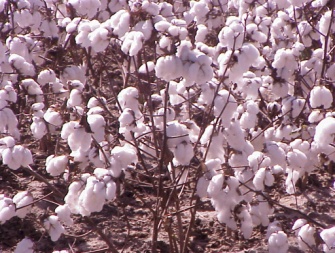
                       Cotton is a soft fluffy looking capsule that grows around the seeds of a cotton plant. Cotton has dated back to the 1600s and 1700s. In the seventeen hundreds machines were made to spin thread and weave cloth in huge bundles. Therefore, production will be more expedient. Even in 300 B.C., Alexander the Great brought cotton to the country of Europe but the price was too high. There is a process of producing cotton. The first step is when the cotton comes it goes into a specific machine that does the cleaning and picking of all the dirt out of the cotton. A carding machine separates cotton fibers from long to short . Then there is another process called spinning. In the process of spinning there are three procedures which are  draft , straighten, and then cotton is made for weaving into clothes. After the cotton has been inspected , then it is sent through gase flames to take off the fuzz off the cotton. The cotton boils in alkaline solution to get rid of discoloration. Finally, the cotton is bleached through other chemicals and dyed in a machine. Cotton has many uses and one of my favorite fibers. Cotton production companies put cotton under sweaters to keep me warm. Cotton is used for abundant of warm clothing and does not irritate my skin. In my personal opinion, cotton is very soft upon the skin and very valuable in modern day world. The main point that forensic scientist students need to know is that cotton is a very popular fiber and the fiber goes through a procedure in order for the cotton to be in clothing.
                                                                                                                              This is a picture of wool.
      Wool can come from different animals such as sheep, rabbits, camels, and goats. Mostly wool comes from sheep. There are four processes of wool including shearing, sorting and grading, yarn, and fabric. First, you have to shear a sheep for its wool. The second step is sorting and grading of cotton. This means that you have to pick out all the dirt from the wool. This also means to separate all the wool fibers from bad to good. Next, the wool is washed in yolk to remove remaining impurities and then wool fibers are sent into a carding machine that untangles the fibers. After that fibers are made into a web. Then the web is transformed into ropes called silvers. The process of creating yarn relies on how long the fibers are. Lastly, the fiber weaves the yarn into different fabrics including jackets, pants, sweaters, and dresses. Wool in my opinion is warm to wear but can be irritating to the skin. I do not have an abundant amount of wool clothing because I think wool is not that popular to wear. Wool is used to make comfortable hats, scarf, and gloves so I have an absolute reason to appreciate wool.

      .

                                                                                                                      This is a picture of silk.


                                                                                                                     This is a picture of nylon.

      Nylon is the second most important fiber in the U.S. Nylon was first used to make pantyhose stockings for women. The development of cotton came from the Chemist William H. Carothers. Nylon has very strong texture and is not heavy at all. Nylon is made by using molten nylon through a system called a spinneret. The nylon becomes hard by the cool air. Then the nylon fibers are wound into bobbins and are stretched after they cool. The stretching process of the nylon makes the nylon become elastic. Nylon is elastic, stretchable, not effected by heat, and quickly dries. Nylon is used for clothing such as swimwear, leggings, and pantyhose stockings.

                                                                                                                                  This is a polyester fiber.

      Polyester is the most used fiber in the world and was first created by company named du Pont de Nemours Company. Polyester  is the linking of several esters within a fiber. The chemical process to create polyester contains ethylene glycol and dimethyl terephthalate .These two chemicals together create a reaction that results in bisterephthalate . Polyester is resistant to mildew, shrinking, wrinkles, and most chemicals. An unfamiliar fact about polyester that I did not know that it is made from the same substance as plastic drink bottles. Polyester was created in Britain in the 1940s, then in 1950s it became popular household products such as drapes. In my personal opinion, I think polyester is irritating to the skin for me. Polyester also does cling to different objects.

      All of tese fibers help me in my everyday life. These fibers can help people in case they are murdered they link these fiber to a suspect of the crime. These fibers are extremely important to me. I did not know Nylon is used in stocking and leggings. This was a very enriched insight detailed research about fibers. I knew that fibers could create  cloth but I did not know what types of clothing. For instance I did not know that Polyester was made out of the same substance as plastic drinking bottles. I thought to myself this is very weird but very insightful.Silk which is very pretty but is very irritating to my skin. I feel like i know so much about fibers than I knew before.

      Citations for Research
      "Cotton." Wikipedia, the Free Encyclopedia. Web. 29 Nov. 2011. <http://en.wikipedia.org/wiki/Cotton>.

      This website above gets the credibility of showing the true definition of what cotton is.

      "Textiles." Oracle Think Quest, Education Foundation. Web. 21 Nov. 2011. <http://library.thinkquest.org/C004179/textiles.html>.
      This website gets the credibility for all of the research about wool,cotton,plyester,silk,and nylon.

      Citations for pictures
      "Microscope." Carpet and Furniture Cleaning, Disaster Restoration, Contract and Facility Cleaning Technical Bulletins. Web. 02 Dec. 2011. <http://www.cleanprosonline.com/microscope.html>.
      This website gets the credibility of the visual image of nylon under a microscope.
      "» Why Rugs Are Not Cleaned in the Home. RugChick.com." RugChick.com. Web. 02 Dec. 2011. <http://www.rugchick.com/2011/04/why-rugs-are-not-cleaned-in-the-home/>.
      This website gets the credibility of the image that was wool shown under a microscope.
      "Cloths under the Microscope." The Wonderful Microworld. Web. 2 Nov. 2011. <http://microbeauty.blogspot.com/2009/08/cloths-under-microscope.html>

      This website gets the credibility of the visual image of cotton, silk, and polyester under the microscope.

       Links

      Silk is very soft pretty,  slippery, and a fiber that dates all the way back to the 27th century when Chinese had received  silk from silkworms. What the Chinese would do was break apart a silkworms cocoon and takes the silk fibers that were left in it. Chinese people would raise silk worms and this made the Chinese community be very wealthy because of this trade. The silkworm is fed with mulberry leaves, which can be yellow, green, or white with a sweet flavor. The production of silk goes into specific procedures. First, silkworms are fed with mulberry leaves. Second, silk can have a different grade such as low or high by what the silkworms are fed. Domestic tree leaves that are fed to silkworms produce a higher grade of silk. Silkworms that feed on oak leaves have a medium grade of silk. Next the silkworm has to be spun by tops of loose straws and   then the protecting coverings  are killed by a heating process. Lastly, silk is used for curtains, draperies, scarves, and dresses. Silk is a smooth, cool and very comfortable material. There is a sensation that I get from silk. Silk is a very beautiful piece clothing fiber to wear to any function to look extremely nice in.

      Saturday, November 19, 2011

      Forensic Science Part II: Hair/Fiber Analysis

      Typical hair/ fiber Analysis. How do scientist anayze and use hair /fiber data?
                                                             
                                                                              This is a picture of hair samples that have been analyzed.

      How do forensic scientist analyze hair and fibers?


      First of all, forensic scientist analyzes hairs and fibers to see who the true suspect of a crime is. When a crime has been discovered police surround the scene so no one disturbs the evidence of the crime scene. Then the forensic scientist come and collects the particular hairs and fibers of the crime scene. Forensic scientist analyzes data from the hair and fibers by using math and problem solving methods. Forensic scientist also uses chemicals, microscopes and different research techniques. Only if the root of the hair sample has blood or skin on it then forensic scientist can do some DNA testing upon the hair strand. Now if the root of the hair has no blood or skin upon it is characterized by its color and structure. Forensic scientists do analyze the hair to see if the hair is an animal hair or human hair. Forensic scientist analyzes fibers by getting them from different particular objects from a crime scene. They use microscopes or different scientific equipment to see the comparison of victim’s fibers to the actually killer. Microscopes are so important in seeing the different details and how they link together. Even if controlled fibers are not shown, a suspect’s fiber can tell a lot of things about the crime. Examining the one fiber from a suspect of a crime can shows information about color and where it is from. Now synthetic fibers have a very weird unnatural texture compared to natural fibers.
      I had no idea that forensic scientist have to do a abundant of things to analyze hairs and fibers at a crime scene. I learned hairs and fibers are the number one cause of getting caught of doing a crime. Hairs and fibers are so powerful. Hair and fibers can tell your DNA and if you were at the crimes scene . It is just mind blowing of the things you can do with hairs and fibers. I tell you I won't be creating a crime any time soon!


      "HowStuffWorks "How Forensic Lab Techniques Work"" HowStuffWorks "Science" Web. 02 Dec. 2011. <http://science.howstuffworks.com/forensic-lab-technique.htm>.
      This website above gets the credibility of the idea in my posting about how forensic scientist use scientific equipment to analyze fibers.


      Dillion, Hall. "Scientist The Crime Lab." Forensics A Carrer In. Web. 17 Nov. 2011. <http://www.bls.gov/opub/ooq/1999/Fall/art01.pdf>.

      This website above gets the credibility of the idea that I used in my research posting about forensic scientist using math, problem solving methods, chemicals, microscopes and other different research techinques.

      "Hair Analysis - ENotes.com." ENotes - Literature Study Guides, Lesson Plans, and More. Web. 02 Dec. 2011. <http://www.enotes.com/hair-analysis-reference/hair-analysis>.

      This website gets the credibility of the idea of forensic scientist analyze the hair by the root of the hair which contains DNA .


      Sapp, Brennon. "Hairs and Fibers." Forensics. Web. 4 Nov. 2011. <http://www.bsapp.com/forensics_illustrated-/forensic_text_adobe./text_unit_5_hair_fiber.pdf>.

      This website gets the credibility for the idea of that if the hair root has no blood or skin on it than the hair is characterized by color and structure. This website also gets the credibility of the idea of examining one lone fiber can tell the color and the origin. In addition to, this website gets the credibility of the idea that synthetic fibers have unnatural texture.


      Links

      http://www.thermo.com/eThermo/CMA/PDFs/Articles/articlesFile_2278.pdf

      http://www.swgmat.org/Forensic%20Human%20Hair%20Examination%20Guidelines.pdf


      Thursday, November 17, 2011

      Forensic Science Project Part II: Hair/Fiber

      Picture and labeled parts of a complete hair
      Hair Diagram


      Hair is the most common type of physical evidence. Hair has many various parts to it such as papilla, root sheath, hair shaft, medulla and each part has a specific job to create the human hair. Hair is a thin fine like strand that grows throughout the skin. Hair can be found in many places but the head most importantly. Here’s a joke to spice up the hair follicle structure  The Sunday School teacher asked if any of the children's parents had quoted from the Bible in the past week. Little Timmy paused, but then spoke up, 'My daddy doesn't have any hair on his head. Daddy says that God put hair on everything that he was ashamed of.” The human hair structure has an abundant of parts that consists of it. Hair extends through the bulb and continues out as a shaft. The shaft terminates at the tip of the human hair. Forensic scientist students need to know that the shaft is the most observed part of the human hair. The shaft contains of three parts cuticle, medulla, and  cortex. There are also cuticle patterns such as coronal, spinous, and imbricate. The coronal is shaped like crown or has zig zaggy stacked cups. The spinous is shaped like triangle shaped scales that is going upward.
      The medulla is the inner part of the hair strand made up of connected cells which are called keratin. The medulla is presented at the top of hair diagram. However, there are different classifications of the medulla including fragmented, discontinuous/Intermittent, continuous, and absent. The fragmented part is broken up into small sections and not all the same sizes. The discontinuous /Intermittent is presented with longer segments of the hair with a lot more space in between. The continuous of course does not break it keeps continuing in the medulla. The absent part is when there is no medulla presented in the hair strand. Forensic scientist students need to remember that the medulla is another part of the hair structure it is broken down or classified to get a better understanding of the Medulla.
      Lastly, the cortex is between the cuticle and the medulla. The cortex is made up of cells that are in a tampered at each end and is parallel to the length of the hair. They are many other structures of the hair that consists of the papilla, root sheath, bulge, and matrix. The papilla has connective tissue and is at the base of the hair follicle.
      The root sheath has two parts to it internal and external. The internal root sheath consists of three parts Henle’s parts, Huxley’s parts, and contains an internal cuticle. The bulge of the hair strand is on the outer root sheath near the pill muscle and it creates new cells in the hair follicle. A pill muscle is The bulge of the hair is very important to know of the hair strand.
      Forensic scientist students have to put all these specific structures in consideration when analyzing a hair strand at a crime scene. I think the hair follicle is a fascinating structure to look at. In the human hair structure, you have all these parts that contributing to the making of a hair strand. All my life I never thought the human hair had all these various parts to it. I thought the hair is something that grows out of your skin unexpectedly. Hair is something that I like because of the hairstyles you could put on your head. Hair is put on our body for different reasons.
        Citations
      "Hair and Fiber Analysis." Hair and Fiber Analysis. Web. 28 Nov. 2011. <http://www.centralreg.k12.nj.us/webpages/SHopson/files/hair.pdf>.
      This website above gets the credibility of all of the research containing the various parts of the human hair structure.
      Picture citations
      "Beau Cheveux :: Custom Human Hair Wigs, Hair Extensions, Wefts, Braids, Wig Shop in Maryland, Wholesale Wigs." :: Beau Cheveux :: Custom Human Hair Wigs, Hair Extensions, Wefts, Braids, Wig Shop in Maryland, Virginia, Washington DC, Wholesale Wigs. Web. 28 Nov. 2011. <http://www.beau-cheveux.com/hair_information.html>.
      This website above gets credibility of exhibiting a picture of the various parts of the human hair.


      Links